 Better Vision
The World's Most Surprising Economic Success Story Is…North Korea
Article from The Wall Street Journal. Published Sunday, June 7, 2026. Written by Dasl Yoon and Timothy W. Martin.
-
North Korea's economy grew 3.7% in 2024 — its fastest pace in eight years — as arms exports, troop deployments to Russia, and surging Chinese trade flooded the regime with hard currency and materials that sanctions were designed to deny it.
- Arms sales and troop payments have generated an estimated $10+ billion since mid-2023, against a GDP base of roughly $27 billion, according to the INSS think tank.
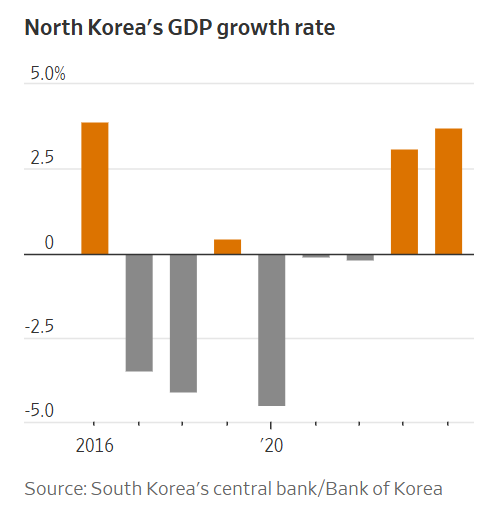
Source: South Korea's central bank/Bank of Korea - Monthly trade with China recently hit an eight-year high, and North Korean cyber units operating from Chinese soil have stolen additional billions from cryptocurrency exchanges.
-
The turnaround began with Russia's 2022 invasion of Ukraine, which transformed Kim Jong Un from an economically isolated dictator into a valued war partner, delivering not just cash but weapons technology, diplomatic cover, and a formal mutual-defense pact with Moscow.
-
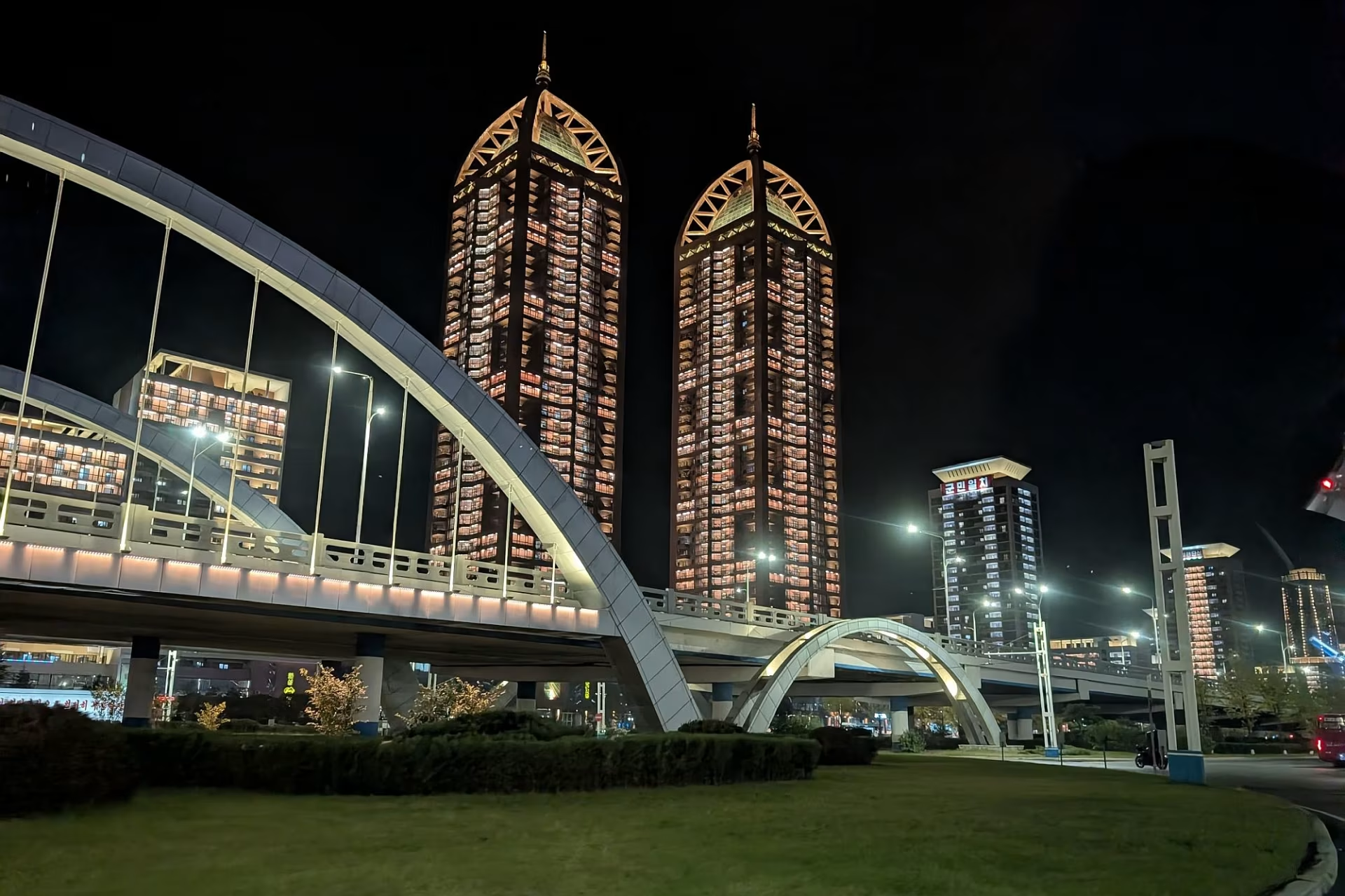
Pyongyang has been visibly remade. Nighttime light emissions from North Korea are roughly three times brighter than five years ago, and vessel activity at oil-storage facilities has surged, according to South Korean think tank analysis.
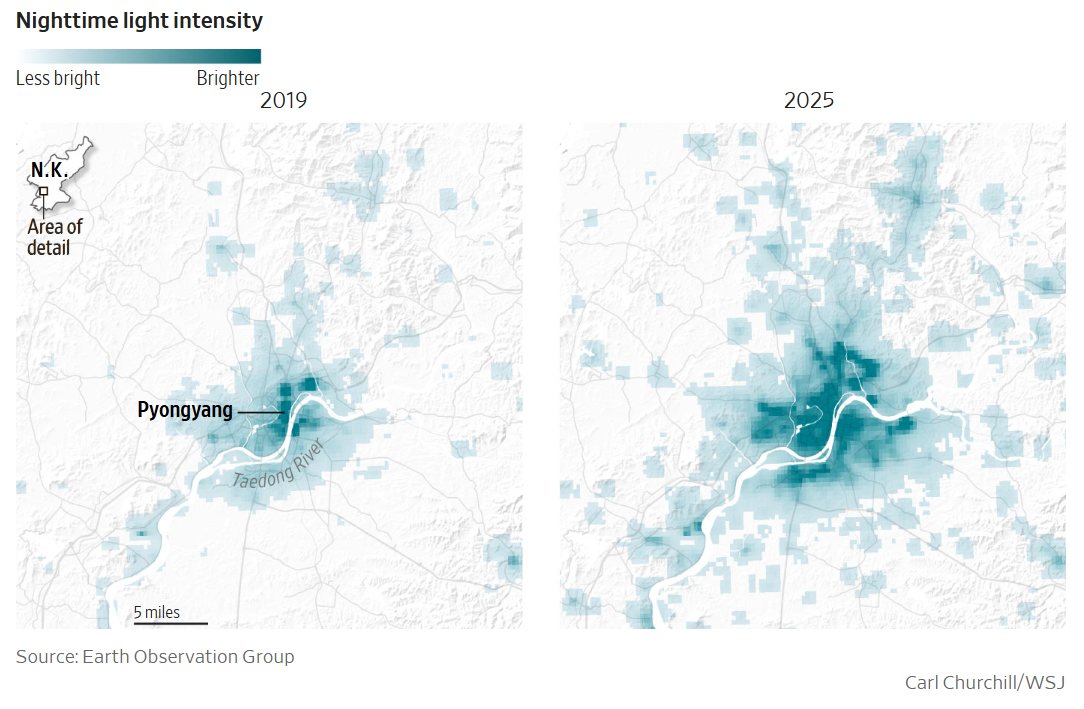
Source: Earth Observation Group -
The central risk is that sanctions have been functionally broken as a containment tool: Russia and China, both holding U.N. veto power, are actively dismantling the architecture, while North Korea's nuclear deterrent removes the threat of forced regime change that once gave Washington leverage.
- Economic progress makes a nuclear deal less likely, not more — the sanctions relief the U.S. has historically offered as an incentive now holds far less value to a regime with alternative revenue streams.
The broader lesson is that a rogue state can achieve genuine economic momentum through strategic alignment with revisionist great powers, turning geopolitical pariah status into a comparative advantage when the rules-based order fractures.